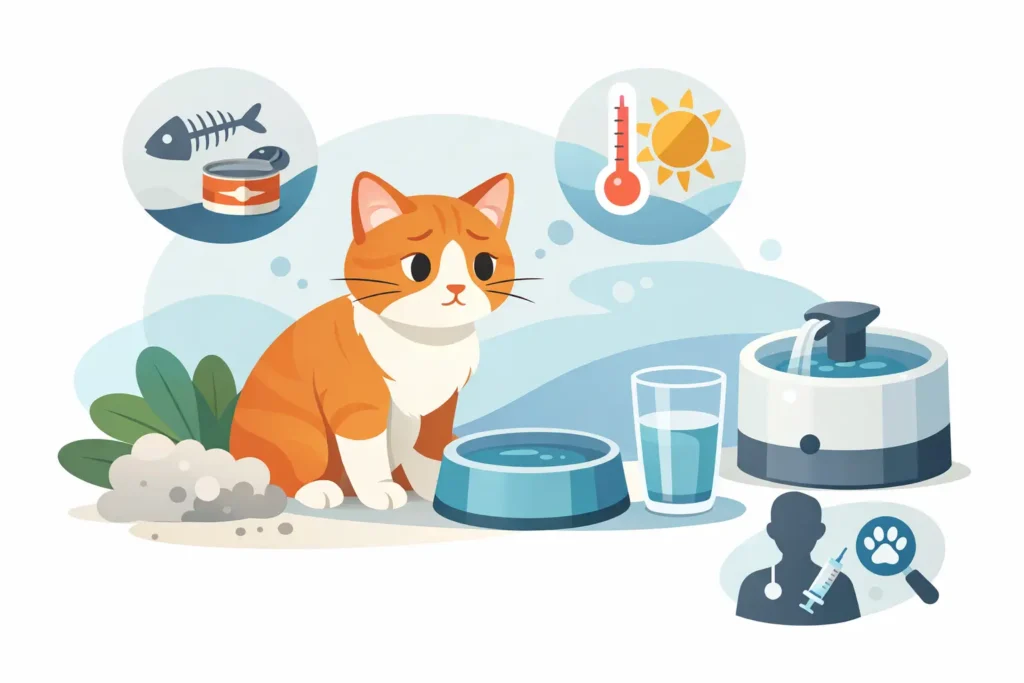
Your cat has walked past a perfectly clean bowl again, looked at you like you have personally offended them, and gone back to napping. So, why won’t my cat drink water? Sometimes the answer is completely normal feline behavior. Other times, it is your cat’s quiet way of saying something needs attention.
Cats can be very subtle about hydration. They are not usually the type to make a dramatic announcement when their routine changes. That is why noticing a low water intake, especially alongside changes in appetite, litter box habits, or energy, can make a real difference.
Why Cats Often Drink Less Than We Expect
Domestic cats inherited a few habits from their desert-dwelling ancestors. Their bodies are naturally good at getting moisture from food, which means many cats do not visit the water bowl as often as a dog might. A cat eating wet food or high-moisture treats may drink very little from the bowl because they are already taking in water through meals.
Dry kibble changes that equation. It contains far less moisture, so cats eating mostly dry food generally need to make up more of their fluids by drinking. The tricky part is that some cats simply do not feel strongly driven to do that.
A cat who seems to drink very little but eats moisture-rich food, urinates normally, and acts like their usual demanding little self may be doing fine. A cat who barely drinks, eats mostly dry food, and produces small amounts of urine deserves closer attention.
Why Won’t My Cat Drink Water From the Bowl?
The water itself may not be the problem. Cats can be extremely particular about the bowl, its location, and even the mysterious vibe of the room. Three professional food critics would probably have three different complaints.
The bowl is too close to food or the litter box
Many cats prefer their water away from both their food and litter tray. In nature, water near a food source may not stay fresh, so this preference is not as random as it looks. Try placing water in a separate, quiet spot where your cat does not feel cornered or interrupted.
The water does not smell or taste fresh
Cats have sensitive noses. A bowl that seems perfectly fine to us may smell stale, carry a trace of detergent, or have a taste your cat dislikes. Wash bowls daily with mild, unscented soap and refill them with fresh water at least once a day. In warmer Malaysian weather, refreshing it more often is a thoughtful move.
The bowl feels wrong on their whiskers
Some cats dislike narrow or deep bowls because their whiskers brush the sides. This is often called whisker stress or whisker fatigue. A wide, shallow ceramic or stainless-steel bowl can be more comfortable than a small plastic dish.
Plastic can also hold odors and develop tiny scratches over time. If your cat ignores a plastic bowl, switching materials is an easy experiment. No fuss, just a different bowl.
Your cat prefers moving water
Some cats are more interested in a gentle stream than still water. A pet fountain can encourage drinking because the water moves, stays aerated, and may feel fresher. It is not a magic fix for every cat, though. Some cats dislike the motor sound or become suspicious of anything that bubbles.
If you try a fountain, keep a regular bowl out too. Let your cat decide without pressure.
Stress has changed their routine
A move, renovation noise, visitors, a new baby, another pet, or even a changed work schedule can affect a cat’s eating and drinking. Cats like predictability. A stressed cat may drink less because they do not feel safe enough to visit the bowl.
Offer water in more than one calm location, especially in multi-cat homes. One confident cat can quietly claim the best water station, leaving everyone else to pretend they were never thirsty anyway.
When Low Drinking Can Be a Medical Concern
A sudden change matters more than a cat’s usual personality. If your cat normally drinks from the bowl and now avoids it, do not assume they are simply being picky.
Mouth pain can make drinking uncomfortable. Dental disease, sore gums, ulcers, and injuries may cause a cat to approach water but pull away, drool, paw at their mouth, or eat less. Nausea, fever, constipation, kidney problems, urinary issues, diabetes, and other illnesses can also change thirst and hydration.
Call a veterinarian promptly if your cat is not eating, seems weak or unusually sleepy, vomits repeatedly, has diarrhea, appears painful, or has noticeably changed litter box habits. Straining to urinate, crying in the litter box, making frequent trips with little or no urine, or not urinating are urgent signs, especially for male cats. Do not wait to see if it passes.
You can gently check for possible dehydration by looking at the gums. Healthy gums are usually moist, not tacky or dry. But home checks are not a diagnosis, and cats can hide illness remarkably well. When something feels off, trust that instinct and get professional advice.
Easy Ways to Help Your Cat Take In More Moisture
The goal is not to force your cat to drink on command. It is to make hydration easier and more appealing throughout the day.
Start with multiple water stations. Put fresh water in two or three places your cat already likes to visit, keeping it away from food and litter. Offer different bowl types if needed: wide ceramic, stainless steel, or a fountain. The best setup is the one your cat actually uses.
Food can carry a meaningful amount of moisture too. Wet food is one option, and you can mix a little water into food your cat already enjoys. Begin with a small amount so you do not accidentally turn a favorite dinner into an unacceptable soup. Some cats like it gradually wetter; others will submit a formal complaint at the first extra teaspoon.
High-moisture creamy treats can also be a practical bridge for picky cats, particularly when they are offered as part of a balanced feeding routine rather than as a replacement for complete meals. CATRIX creamy chicken and pumpkin treats contain 80% moisture and are designed for cats who need a little more encouragement at snack time. They are grain-free, halal-certified, and made locally – but the real test, as always, is whether your cat’s tiny internal food judge approves.
You can offer a creamy treat straight from the stick, squeeze it onto a dish, or mix it with a small splash of water if your cat accepts the texture. Keep portions sensible and follow the feeding guidance on the pack. Treats are helpful helpers, not the whole menu.
Avoid adding milk, salty broth, seasonings, or human drinks to tempt your cat. Many adult cats do not tolerate milk well, and ingredients like onion and garlic are unsafe for cats. Plain water and cat-appropriate foods are the safer choice.
Watch the Litter Box, Not Just the Water Bowl
It is easy to obsess over how often your cat drinks while missing the more useful clues. Their appetite, behavior, and litter box output tell a bigger story.
A well-hydrated cat typically urinates regularly, though the exact amount varies with diet, weather, activity, and age. Scoop the litter box daily so you can notice what is normal for your cat. If clumps suddenly become much smaller, much larger, more frequent, or disappear, that is worth paying attention to.
A simple note on your phone can help if you are worried: record meals, treats, water bowl refills, urine clumps, vomiting, and behavior for a day or two. That information gives your veterinarian something far more useful than “I think they have been weird lately.”
Your cat does not need to become a water-bowl enthusiast to be well hydrated. Offer fresh choices, build moisture into meals where it makes sense, and keep an eye on the quiet signs. For a cat who has turned hydration into a negotiation, small daily changes can be the kindest win.